AO3 News

Post Header

Published:
Wed, 27 Sep 2023 15:12:18 +0000
Tags:

Five Things an OTW Volunteer Said

Every month or so the OTW will be doing a Q&A with one of its volunteers about their experiences in the organization. The posts express each volunteer's personal views and do not necessarily reflect the views of the OTW or constitute OTW policy. Today's post is with Brian Austin, who volunteers as a coder for our Accessibility, Design & Technology committee.

How does what you do as a volunteer fit into what the OTW does?

I’m a coding volunteer with the AD&T (Accessibility, Design & Technology) committee. We’re responsible for writing the software that runs AO3, including adding new features and squashing pesky bugs. We also test changes to the Archive’s code before they go live to users to make sure what we’ve written does what we expect it to, and doesn’t have unexpected side-effects.

What is a typical week like for you as a volunteer?

Most often, I will either be writing code or testing changes before they go out to the production version of the Archive.

When I write code, either to add new features or fix old bugs, I start by looking through the AO3 Jira backlog for issues that are high priority, involve familiar parts of the code, or just sound interesting. Once I’ve found something to work on, I’ll tinker around on my laptop until things are ready for another volunteer or community contributor to review and incorporate their feedback.

For testing, I start in the same place: Jira. I use a filter to find issues that need to be tested before they go out to the Archive and go through the steps issue writers have created to test the changes. Exactly what this looks like depends on the changes; one recent example involved creating a work with loads of pipes (|) to make sure the word count doesn’t include them.

I sometimes review code as well, both to help when the more senior folks are super busy and to learn more about how Rails (the web framework the AO3 uses) works.

What made you decide to volunteer?

I started out as a community contributor after a suggestion from a friend (the same one who got me into fanworks). At the time, I was looking to contribute to an open source project and do something a little bit different than the code I wrote at work.

After about a year of writing code as a community contributor – and submitting a design proposal for a feature I really wanted – Accessibility, Design & Technology co-chair sarken messaged me to ask if I would like to join in a more official capacity. I had been wanting to get more involved, so it was an easy decision!

What has been your biggest challenge doing work for the OTW?

In some ways, writing code for the AO3 is a bit different than in a corporate setting. For example, “spinning up a new service to do X” is not as easy when you can’t push a button in AWS and “magically” get more computing resources or another database. That has an impact on how some features get designed, but so far it’s been a fun way to push myself to think differently.

What fannish things do you like to do?

Read lots and lots of fanfic! I’ve bonded with several friends by sharing different fics, and I may have a slight problem with subscribing to many WIPs. I read works across several fandoms, but most consistently works that take Obi-Wan Kenobi and give him a big metaphorical hug because, wow, Legends is rough to that poor soul. Check, Please! also has a special place in my heart for getting me into fandom in the first place.


Now that our volunteer’s said five things about what they do, it’s your turn to ask one more thing! Feel free to ask about their work in the comments. Or if you'd like, you can check out earlier Five Things posts.

The Organization for Transformative Works is the non-profit parent organization of multiple projects including Archive of Our Own, Fanlore, Open Doors, Transformative Works and Cultures, and OTW Legal Advocacy. We are a fan run, entirely donor-supported organization staffed by volunteers. Find out more about us on our website.

Comment

Post Header

Published:
Fri, 27 Mar 2020 16:56:46 +0000
Tags:

Five Things an OTW Volunteer Said

Every month or so the OTW will be doing a Q&A with one of its volunteers about their experiences in the organization. The posts express each volunteer's personal views and do not necessarily reflect the views of the OTW or constitute OTW policy. Today's post is with Sarken, who volunteers as co-chair of the Accessibility, Design, & Technology Committee.

How does what you do as a volunteer fit into what the OTW does?

I'm a co-chair of the committee responsible for the development and maintenance of the Archive of Our Own codebase. The Archive provides a home for over five million fanworks, which supports the OTW's goals of preserving and providing access to fanworks.

What is a typical week like for you as a volunteer?

AD&T operates in release cycles, which generally last more than a week, but it's not uncommon to start the week by finishing a release: ensuring all of the changes have been tested, polishing the release notes, and letting other committees know about any changes that might affect their work before the new code is deployed to the Archive.

Once that's done, we wait about a day before putting the next round of code changes onto our staging site, where volunteers from AD&T and other committees test the changes. I usually help coordinate that work in addition to doing some testing myself.

While that's going on, we're also looking ahead to future releases. That involves prioritizing issues and making sure someone is available to write or review the code.

There are a lot of other tasks that might come up during a given week, too, such as handling requests for database work, consulting with Support, making bug reports, or updating documentation. If we're having a widespread issue like slowness or downtime, we also have to communicate the problem to users, which sometimes involves quickly drafting a news post, but almost always involves tweeting. (If someone is tweeting from @AO3_Status, there's a good chance it's me or my co-chair mumble!)

Once those tasks are handled, then I get to write some code!

What made you decide to volunteer?

In 2011, Elz -- one of the AD&T co-chairs at the time -- saw some of the site skins I'd made and asked if I'd like to volunteer. I'd been a fan of the Archive ever since astolat made her "An Archive of One's Own" post in 2007, so it was an easy yes.

I'm also a tag wrangler, which is a role I volunteered for specifically to improve my understanding of how the wrangling features are used. That knowledge comes in handy when working on the wrangling code, plus it makes it easier to communicate with the Tag Wrangling committee about bugs and feature requests.

What's the most fun thing to you about volunteering for the OTW?

The people! My team is terrific, and I really enjoy getting to talk to and work with people from other committees. There are people I talk to almost every day who I wouldn't have met without volunteering, and my life would be poorer for not knowing such kind, talented people.

Coding itself is a pretty close second, though. It's extremely satisfying to hunt down the cause of a bug, and nothing quite beats the "ah-ha!" moment when you finally solve it. Of course, that moment usually gets ruined pretty quickly by the realization you still need to write tests for your new code...

What fannish things do you like to do?

I've made a few vids and recorded some podfic, but my main fannish activity outside the OTW is writing fic. I mostly write het and femslash, or at least I try to write het and femslash -- about half of those attempts end up being gen.

And whenever I can, I love to leave long comments on fanworks I've enjoyed. You never know when you'll make someone's day, and sometimes you just might make a new friend.


Now that our volunteer’s said five things about what they do, it’s your turn to ask one more thing! Feel free to ask about their work in comments. Or if you'd like, you can check out earlier Five Things posts.

The Organization for Transformative Works is the non-profit parent organization of multiple projects including Archive of Our Own, Fanlore, Open Doors, Transformative Works and Cultures, and OTW Legal Advocacy. We are a fan run, entirely donor-supported organization staffed by volunteers. Find out more about us on our website.
Comment

Post Header

10 Years of AO3

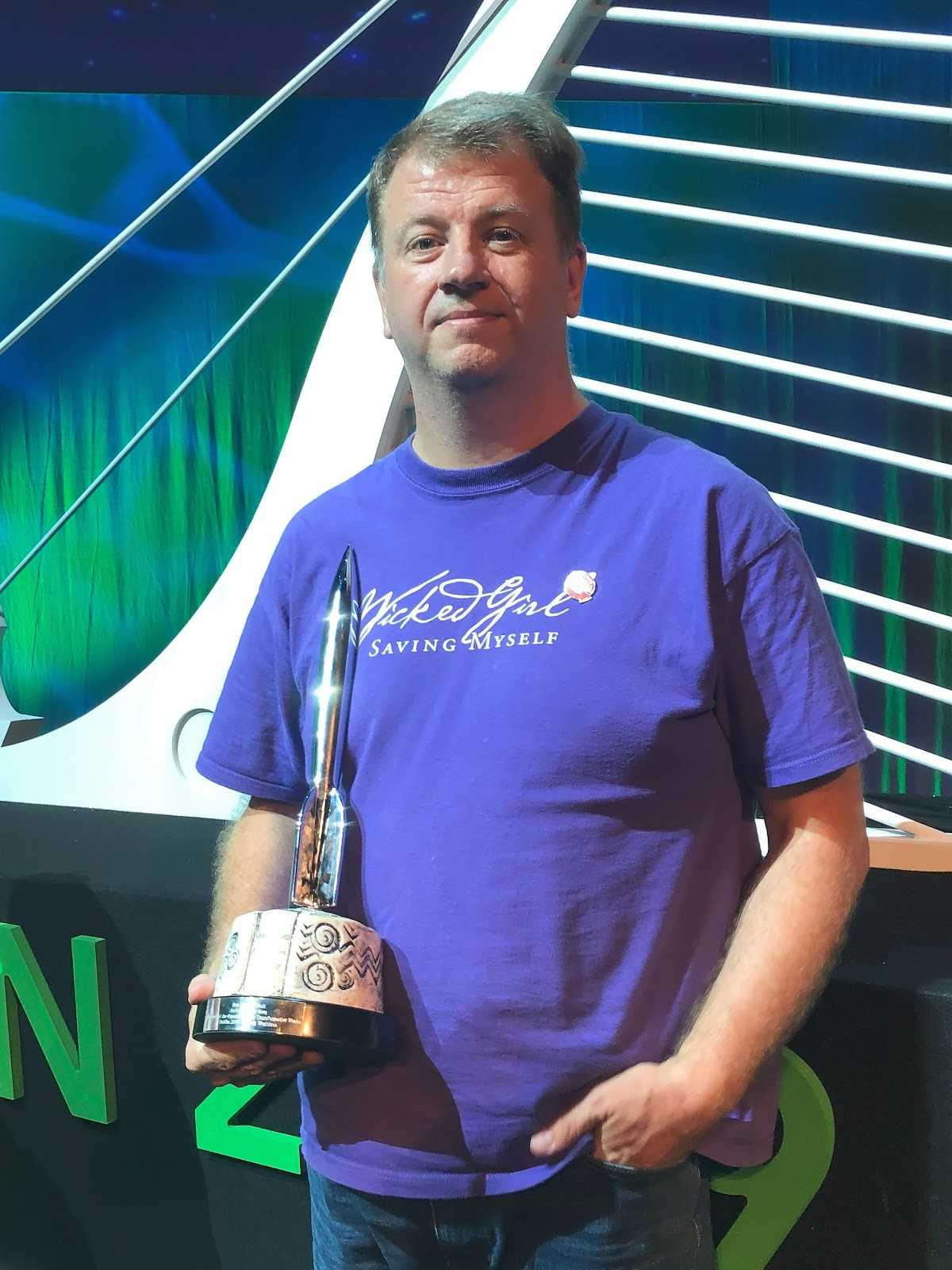
When asked to write up a few words about his time with the OTW and AO3 in particular, james_ had so much to say that he had trouble sticking to the word count. (He’d like to thank Priscilla for helping him to edit!) Below you can read about some of the tougher times that james_ has seen during his time as a member of the Systems and Accessibility, Design and Technology committees. You can also hear about the rewards he’s gained from his hard work to keep our vision clear and our morale high. As you can see below, james_ was amongst the staffers who accepted the Hugo Award for Best Related Work on behalf of AO3.

Volunteering for the OTW in the early days was exciting, stressful, exhausting, and demoralising, but also worth it. At that time we were working with five servers and we were constantly adjusting the load between the few systems we had. We reached out to our friends at Dreamwidth (thanks, Mark) and they helped us. We were learning even as the tsunami of growing AO3 traffic beat down upon our shore.

While there are always people willing to try and pull you down, they are greatly outnumbered by those supporting us and buoying us up. I am grateful to each person who donates to the OTW. Your donations mean that we can afford the machines that keep the Archive running stably, and that nowadays I rarely get woken in the middle of the night due to unexpected downtime.

Something else that has had a significant impact in my volunteering life were the recurring conflicts both my committees had with previous iterations of the OTW Board of Directors. These were a source of great frustration and I even contacted the Legal committee to see how OTW members could call the board to account. After the resignation of the entire 2015 board, things have been much better. No organization is perfect, but I believe everyone in the OTW is very much happier today. I hope this will continue and believe the best way to do that is to ensure that every election is properly contested; I stood for election myself in 2016 and would do so again if necessary to make sure that there were enough candidates.

Our successes have been external as well as internal. This year, I had the pleasure of standing on the stage at Worldcon as AO3 won a Hugo Award and it was such a joy.

james_ holding the AO3’s Hugo award

As for the future, I believe that we will need to raise significantly more than we do today in order to hire paid employees. We cannot sustainably run forever on purely volunteer labor. We get roughly 5% of Wikipedia's pageviews and our budget is about one-third of one percent of theirs.

Comment

Post Header

Published:
Thu, 08 Nov 2018 17:47:24 +0000
Tags:

Five Things an OTW Volunteer Said

Every month or so the OTW will be doing a Q&A with one of its volunteers about their experiences in the organization. The posts express each volunteer's personal views and do not necessarily reflect the views of the OTW or constitute OTW policy. Today's post is with Ariana, who volunteers a staffer in our Accessibility, Design, & Technology Committee and as the Senior Technical Staffer in our Open Doors Committee.

How does what you do as a volunteer fit into what the OTW does?

As a volunteer coder for both Accessibility, Design, & Technology Committee (AD&T) and Open Doors, I mainly help with the OTW's aim of preserving fan history. In my twenty-odd years of online fandom, I've seen many works and sites disappears and it's very satisfying to be able to do my bit to ensure that this happens less frequently in future.

What is a typical week like for you as a volunteer?

Because I have both children and a full-time job, I have to fit my OTW duties in around my "real" life. As a general rule, I will spend several hours at the weekend and at least one or two hours in the evening working on OTW projects, as well as attending the weekly meeting for AD&T and, when I can, the Open Doors one which is a bit late in my timezone.

Fortunately, as I'm a software developer in real life too, I can also sometimes sneak in code reviews, research, or a bit of coding at work without anyone thinking it odd -- as long as I remember not to actually open the Archive or any of the sites Open Doors is importing! Conveniently, we use a lot of the same tools at work too, including the messaging app used by the OTW, which means I'm able to keep in touch with other volunteers to ask or answer questions and keep track of any major projects we're working on.

Have you recently worked on any particularly interesting or challenging projects?

My main focus over the last couple of years has been to create a sustainable pipeline to import archives rescued by Open Doors into the Archive. This has involved adding a mass import API to the Archive and a generic website that Open Doors can use to feed external data into it. There are also a set of scripts that adapt the contents of the rescued archives to the format needed by the generic website. The main challenge now is how to process the variety of old archives with those scripts; since every site is different, importing each one is still a lot of work and we've recently recruited more technical volunteers to help with this. The aim is to make importing archives as painless as possible so we can provide a home to all the sites whose owners ask us to add them to the Archive.

What's the most fun thing to you about volunteering for the OTW?

Perhaps the most useful thing about volunteering for the OTW has been learning software engineering; when I started out as an AD&T coder six years ago, I only knew a bit of theory and some HTML, and now I'm a Principal Software Engineer for a big multinational company!

In a way that's been fun for me, too, because I love computing, but I think to be honest that the most fun aspect of volunteering has been meeting the people I volunteer with. Over the last few years, I've made a lot of friends, some of whom I even meet in real life on a regular basis! It's great to be able to share anything with a group of people who, though they are scattered across the globe, tend to share my fannish, geeky and open-minded views on things.

What fannish things do you like to do?

When I can squeeze a bit of free time, I love to write stories. Most are quite short, but every few years, I'll embark on something long and rambly: my current WIP is over 100,000 words and has been going for nearly two years now! I've always enjoyed making up stories in my head and imagining how the characters from some book or TV show might behave in a given situation. Thanks to the feedback of various betas over the years, I've improved a lot as a writer -- rather as I've improved as a coder!


Now that our volunteer’s said five things about what they do, it’s your turn to ask one more thing! Feel free to ask about their work in comments. Or if you'd like, you can check out earlier Five Things posts.

The Organization for Transformative Works is the non-profit parent organization of multiple projects including Archive of Our Own, Fanlore, Open Doors, Transformative Works and Cultures, and OTW Legal Advocacy. We are a fan run, entirely donor-supported organization staffed by volunteers. Find out more about us on our website.
Comment

Post Header

Published:
Fri, 23 Feb 2018 16:49:40 +0000
Tags:

Five Things an OTW Volunteer Said

Every month or so the OTW will be doing a Q&A with one of its volunteers about their experiences in the organization. The posts express each volunteer's personal views and do not necessarily reflect the views of the OTW or constitute OTW policy. Today's post is with Cosette, who volunteers as a coder for the Accessibility, Design, and Technology (AD&T) Committee.

How does what you do as a volunteer fit into what the OTW does?

As an AD&T coding volunteer, I work with the open-source code that powers AO3. Coders are recruited to fix bugs, write tests, and develop features. We also work side by side with testing volunteers, to ensure the changes we've made to the code won't cause anything to catch fire.

What is a typical week like for you as a volunteer?

AD&T uses a project management tool to track issues (bugs, improvements, new features, tests, etc). So it typically goes like this:

  • Check the planning board for issues I think I can solve
  • Try to solve them
  • Sometimes: cry and dramatically shut my laptop
  • Most times: submit the solution

Other responsibilities include:

  • Creating issues for newly discovered bugs (things that aren't working as intended), improvements (things that could work better), new features (things that don't exist yet but will in the future), tests (automated tests that ensure the website behaves as intended), and so on.


  • Communicating with other members of the AD&T committee about my progress, and keeping up to date with their progress and plans as well.

  • Whenever questions come up, AD&T staff is always helpful in answering them! Also, there's usually some off-topic conversation in the chat room, which is fun.

    Do you have other roles in the OTW besides being a coder?

    Yeah, I also volunteer for Webs, which is the committee that maintains the OTW's website as well as the Elections and Open Doors websites. This mainly consists of fighting WordPress. Since I’m a liaison to Communications, I must also keep them up to date with any problems or changes to the website, and provide answers when they have questions or need a bit of help. Additionally, Webs offers technical assistance to other committees wherever they may need it.

    What's the most fun thing to you about volunteering for the OTW?

    The community. There's a lot of socialising that goes on in the OTW and you can always find someone with a common interest. I've never been a part of a working community that was entirely comprised of fans. In theory, you'd think that would be awesome, and in practice, it is.

    What fannish things do you like to do?

    Writing fanfiction!! Translating manga. And browsing fan art. Encouragement is everything so, when I see something I like, I tell the creator how much I love it. Also, brainstorming headcanons and AUs with friends. The existence of fandom is a pillar in my life and I want to do my part in protecting it and contributing to it; that's why I volunteer for the OTW.


    Now that our volunteer’s said five things about what they do, it’s your turn to ask one more thing! Feel free to ask about their work in comments. Or if you'd like, you can check out earlier Five Things posts.


    The Organization for Transformative Works is the non-profit parent organization of multiple projects including Archive of Our Own, Fanlore, Open Doors, Transformative Works and Cultures, and OTW Legal Advocacy. We are a fan run, entirely donor-supported organization staffed by volunteers. Find out more about us on our website.
    Comment

    Post Header

    Five Things an OTW Volunteer Said

    Every month or so the OTW will be doing a Q&A with one of its volunteers about their experiences in the organization. The posts express each volunteer's personal views and do not necessarily reflect the views of the OTW or constitute OTW policy.

    As part of our 10th anniversary celebrations, we have a special retrospective Five Things this month. Today's post is with Naomi Novik, one of the founders of the OTW, a past board member, and a current staffer with the Accessibility, Design, & Technology Committee. The following is an interview transcript which has been edited for length and clarity.

    What was the first year of the OTW like? What do you remember most from it?

    I don't remember the high points as well, I find that over time what I remember are the problems. In the beginning there was a lot of work we had to do to reassure people about what we were trying to do, such as that they weren't going to get into [legal] trouble, that there would be ways to give people control over their stories. The other piece that first year is that some people expected to see something 5 minutes after we formed! You know, where is the Archive? But it all takes time, there were a lot of growing pains you have when you're putting things together from scratch that the OTW has been left with. But my philosophy is to do the thing if you have the momentum, and it's better to have done something that was not perfect than to not have anything done at all.

    There were certain ways in which a sustainable organization doesn't work on passion, at the same time that you want to be able to harness passion. I think we were struggling a bit with how to get an organization running but at the same time have it grow. A lot of the details are gone for me now -- I have a terrible memory for this sort of thing because once something is no longer my problem, I forget about it, it's just gone.

    One example is figuring out Communications and what it was going to be like [for the OTW and as a committee]. [The early volunteers] were all on LiveJournal, and so regarding communications I thought that it would be just the newsletters we have, and then people from the organization posting on their journals and talking to other fans on an individual level. And it didn't work very well, and I wasn't involved myself, but I remember frustration that we weren't being very successful at doing what we wanted to do there.

    I was more involved on the technical level, which we had plenty of disagreements about too. Because the question was do you design it first, to have everything the way you want it, and then you build it or do you just start building? And I feel very very strongly that we ended up doing it the right way. We really did just dive in and start building. Overall, I'm quite happy with the success of that strategy, and then later, we know it's imperfect and there's things it doesn't do, so that unfortunately you haven't served everyone as well as you could have. It's a trade-off to having an archive.

    I do think, fundamentally, it was the right call, and we are not, by far, the first organization that had to make that call. There are many different ways to make that call and we could have done it in a better way. Now the cost of that strategy has to be paid over a long time. But what matters most to me is that we made something. And the work is being done to get it to a sustainable place. At the beginning there was a very propulsive sort of drive to establish something and to get it running.

    What do you see as the major turning points of the OTW during its ten years?

    We had a huge advantage at the beginning, which is that we started with a small group of people who mostly all knew one another. Me, [current OTW Legal staffer] Rebecca Tushnet and [current Transformative Works & Cultures staffer] Francesca Coppa knew each other, and the other first Board members were in relatively close geographical proximity to one another, so we could get together face to face and discuss things. That was a big help. But we also had enormous expertise in the early group -- legal, academic, pro writing, technical experts. The people on the first board were the lynch pins of their respective committees. So it was a small group that could work together closely and develop things quickly in their own areas.

    For a while in the middle of the OTW's growth we fell away from that. Being on the Board is a tough job and it takes an enormous amount of time to do the work well. I have done it well and have also done it poorly. It's not entirely, but is largely, based on how much time you have to offer, as well as the people you work with, and whether you can communicate with them effectively and whether there's a level of personal trust among you.

    I feel there was a terrible low point that we went through. There was a middle wave; there's been research done on this process among non-profits that shows that what the OTW went through is a common pattern. There is a visionary founder, or team of founders, who bite off much more than they can do. That approach leaves a lot of loose ends. The people who are then recruited and pulled in because of the vision that the founders established see the problems with what was done or with what is happening, but they feel frustrated because they may not have the access to the founders or to ways of solving the problem. So then things turn antagonistic on either a personal or organizational level. So the OTW then had lots of people running for the Board being against what was happening to the Board.

    So while things aren't going well and the Board isn't doing everything great, at the same time the people on the Board know a lot about what's going on in the organization because there have already been discussions and arguments that led up to that point, they've been there, and know the reasons for why things are happening. But there's no trust anymore and the Board as a group has gotten dysfunctional. And we have had several dysfunctional Boards.

    Then you have the third wave who are happy doing their thing within the OTW and don't necessarily want to be on the Board. But they've seen the problems, they've come up in the organization and have seen what is going on at the top. And even though they'd rather just be able to keep doing the work that they've been doing, they feel they have to step up and fix this situation we've found ourselves in. That's the kind of Board we have now, and that's a good place. The OTW got through those growing pains, which is important because there are a lot of organizations who don't make it through that period, through those transitions.

    In the beginning the contrast was, we had lots of disagreements but it was a foundation when everyone knew each other and respected each other's skills and knew of one another before ending up on the Board. That can be good but it also creates insularity. Those first few years were about just vrooom -- anything you wanted to try, you just tried. There wasn't anything that stopped you. There was nothing there yet so you just created something.

    So in the beginning you didn't have people already doing things a certain way that then would all have to be changed -- you can't do that to people and disrupt their work and processes in that way. Especially on the coding side, that's an enormously creative period in the beginning where you're just creating. And in general, many people like to build new things and do not like to maintain old things, technology-wise. So at the beginning it's much easier. We all got our hands dirty. None of us had ever worked on anything the scale of what the OTW is now and we were just figuring it all out. For some people it is stressful having to start something, but for others it also is to maintain and grow it.

    During your time with the OTW, what have you personally achieved that you feel the most proud of?

    The Archive of Our Own is there, just, it exists. On a meta level, when I first made the post about building an archive, I wasn't thinking of it as something I would do. I even said it was something we needed and if someone else would do it then I would help them. But then I saw that no one was volunteering, and I had a moment, I remember this moment, knowing that setting this project in motion would be an enormous time sink, and an emotional sink, and that it would have opportunity costs for the rest of my life. But I did it anyway.

    That original discussion generated a certain momentum, and we needed to build on it right away. There's one moment when you can take an idea to the table, and if you miss it, it's going to collapse, it's not going to be a thing at all. At the time I made that post I did it because I was mad and I believed it, I believed we had to do something. It's that whole cliche 'You have to be the change you want to see in the world.' And so I went to Rebecca and Francesca and said 'we're going to do it, but I can't do this without you.' And they said 'alright, we're in.' We'd had conversations before about the problems we wanted the OTW to address and this was the time to do something.

    What do you see as the role of the OTW now and do you think that's changed since it began? How might it change in the next 10 years?

    The #1 thing that I feel like the OTW has now that it didn't at the very beginning was the role of maintaining things, such as keeping the AO3 up and functioning. And now the Archive, and Fanlore too, but Fanlore is much easier to keep up. It's not easier to grow it, but just to keep it from falling down it's easier. Even the AO3 is hard to grow over the next 10 years just because you need to bring it up to a modern technical level. There should be discussions going on, and I expect there are, about version 2.0 of the Archive. But the AO3 should not look the same 10 years from now, and we need to start thinking about that plan [of how to get there] now rather than later.

    We took a responsibility on and I know that -- even during the darkest moments of the Board where I literally thought that the entire tech staff would quit and there would be no one to run AO3 -- that what kept people on [as volunteers] even though there wasn't any kind of good resolution to the problems, it was the inertia of not wanting to drop the ball. There can come a time where there can be too high a personal cost in continuing to work on our projects, but if it requires me [personally] to keep working on it then it's not going to survive anyway. I could not be the one responsible at that stage of my life to continue the maintenance and development of what we had started. I had a small child, my life was changing. And I actually had tried to have conversations with the Board, which was difficult, that if you don't trust the staff to know what to do and to have the room to make those things happen then the project isn't going to survive. There's just a few people keeping it up, and there still are only a few people doing that work, but now there are contractors involved to help move us forward and a process for making the Archive more maintainable.

    We all need to gracefully agree and also gracefully fail. And there can be a day when the lights don't come on. There could be a day when we can't afford to keep it running but we keep the stories available for download and provide the data so that someone else can take it on. It's the same thing that Open Doors is trying to save us from, that there are sites that just shut their doors, bye, all your work's gone. [The website] iMeem did that to [fans who were] vidding. Just one day, oh we're not going to host vids anymore. I feel very strongly that we have an obligation not to do that, that's the mission, that the #1 thing the OTW has to do. And I feel that it's happening [that we're keeping things going and maintaing them] so I'm happy with that.

    I also feel that legally we're in a better place than we were which is great, and I'm really proud of everything that the Legal Advocacy team has accomplished. It's been amazing to see their victories. I feel like the OTW has done a good job of preserving things too through Open Doors, that's something I'd like to see more focus on, preservation work. But the major thing to work on is also the next generation. Fandom is much larger now than it used to be so we don't need to get everybody, to have the OTW be something to every fan out there. But you do need to be in a place where the kids are at, there's not enough engagement with Wattpad for example. So I think we have people come to the Archive and want and expect things of it, and then go away without quite understanding what it's supposed to be.

    One thing I don't want the OTW to do is to try and become hip and trendy and reinvent ourselves in order to try and do that. We want to be the library, the boring place but the one that everyone knows about, and it's there if you need it.

    What has been the most fun thing to you about volunteering for the OTW?

    Building the AO3. I love coding, I think it's enormously fun, just building and coding something. I love that, that's the best.


    Now that one of our founders has said five things about what they've done, it’s your turn to add one more thing! How long have you known about the OTW? Do you use the different projects? How long have you been in fandom?

    You can also check out earlier Five Things posts by some of our other volunteers.

    The Organization for Transformative Works is the non-profit parent organization of multiple projects including Archive of Our Own, Fanlore, Open Doors, Transformative Works and Cultures, and OTW Legal Advocacy. We are a fan run, entirely donor-supported organization staffed by volunteers. Find out more about us on our website.

    Comment

    Post Header

    As you might have noticed if you're following our Release Notes, we've been focusing on humdrum back-end updates for quite a while now. Words like "test coverage" and "strong parameters" have featured prominently in every change log for almost a year, and we haven't been able to focus on more visible features and fixes. However, progress is being made, and thanks to your donations we have the financial means to work with contractors for a good part of these updates!

    Having worked with a few other contractors in the past, primarily on smaller fixes to our codebase, we now have a stellar team that's been by our side for much of our big Rails upgrade, and will hopefully stay on for a few more projects after that. \o/

    However, it's important to note that being able to afford contractors doesn't mean that all the work gets done right away. (Alas.) Our small team of volunteer coders and testers still has to thoroughly review and test all code submissions, while still living up to their pesky "real life" commitments. Bugs can still take days to solve, whether the person elbow-deep in code is being paid or not. And unforeseen problems affecting site stability and security still take precedence above all else, tying up volunteer time. (This is also the reason major code updates have been delayed for so long: there's always another fire to put out!)

    As a result, the slog through our outdated code will take a while longer, and progress will seem slow from the user side. We are currently on Rails 3.2 and our upgrade will take us to the latest version of Rails 5. (Anyone familiar with Rails knows that this is quite a bit of work.) And once we’re done with the Rails work, we need to upgrade Elasticsearch, which powers the Archive's search and filtering functionality. After that's all done, we'll take a little nap we can go back to more exciting and significantly more visible projects!

    We want to thank you for bearing with us through it all, and for the donations that make it possible to outsource some of the workload involved in updating the Archive code. We can't always reply to comments here, and we can't respond to every tweet (even if the reaction gif is really funny), but we see you, and we appreciate you. Thanks for your support over all these years! <3

    Comment

    Post Header

    Here at AO3, we've been looking into getting some paid coding help for a few years, to work on projects that are larger or more time-consuming than our volunteers are able to tackle in their spare time, and also just to help with the backlog of work and offer some extra assistance. We had a contractor take on a few small projects last year, but to outsource work on major projects, you need to be able to form longer relationships.

    Today we're excited to announce that thanks to user donations, we've been able to contract an experienced programmer for several months' worth of work! \o/ And she isn't just an experienced Ruby developer — she's a Ruby developer who has been working on the Archive since 2008! Since she's familiar with all the nooks and crannies of our infrastructure, it will be easy for her to jump right in on major projects, like the much-needed update to our searching and filtering code. After that, it's onwards to back-end improvements, code cleanup, and other long-awaited projects like site internationalization.

    Our new contractor is starting work next week, and we'll have a preview of her work on the searching and filtering code soon! Thanks to all of you for the donations that have been keeping the site running and are now enabling us to make it even better.

    Comment

    Post Header

    Published:
    Fri, 28 Oct 2011 15:43:46 +0000
    Tags:

    Are you interested in volunteering as a coder or tester for the Archive of Our Own? Do you have questions about our development process, or would you like to learn more about how archive features go from idea to reality? The Accessibility, Design and Technology Committee will be holding an open house to talk about our work and answer any questions you may have!

    All are welcome! The chat will be held on Sunday, October 30th at 20:00 UTC (what time is it in my timezone?) in OTW's public chatroom on Campfire. The chatroom can be accessed at https://fanarchive.campfirenow.com/e79cc.

    Accessibility, Design, & Technology is the guiding body that coordinates software design, development and testing on behalf of the Organization for Transformative Works. Currently we are responsible for designing and building the Archive of Our Own.

    Comment

    Post Header

    Published:
    Fri, 07 Oct 2011 15:17:37 +0000
    Tags:

    Happy Ada Lovelace Day from everyone at the Organization for Transformative Works!

    Celebrating women in technology is a subject close to our hearts: when the OTW came into existence in 2007, one of our major motivations was the desire to give fans control of the tools and infrastructure which support fannish creativity. The predominately female fannish communities from which the OTW emerged have a long history of mastering new skills and sharing expertise for fannish pursuits — the vidders of the 1970s were pioneering mashup techniques decades before they became trendy! — and we want to extend that skill-sharing to the creation of a fan-owned home that welcomes all fans.

    The vast majority of OTW volunteers identify as female, and the amazing things our teams have achieved demonstrate that they all deserve to be considered tech heroines! Below, we highlight the work of our tech-focused teams and the individual voices of some of our staff and volunteers.

    Archive of Our Own

    The AO3 is the major tech project for the OTW, and is supported by several committees and volunteer groups: Accessibility, Design, & Technology; Systems; Support; Tag Wranglers; Coders; and Testers. We're one of the largest female-majority open source projects in existence, and we're proud that in less than four years we've developed from nothing more than a cool idea to become a thriving site with more than 23,000 users.

    Last Ada Lovelace Day we polled AO3 volunteers to find out a bit more about them, and we thought we'd repeat the experiment this year. The charts below give a summary of their answers:

    Bar chart showing the gender identifications of AO3 volunteers: Female - 83%, Male - 12%,  Other -25%.

    Bar chart showing the capacities in which people have contributed to the project: A coder - 29%, A designer - 15%, A tester - 44%, A tag wrangler - 49%, A support team member - 20%, A docs member - 7%, A systems member - 15%, Other - 37%

    We're still very definitely a female-dominated project; however, we're interested to note that since last year the number of volunteers who identify as male has increased by 10%. We think this reflects the fact that we are focused on making a welcoming and supportive environment for people to gain new skills. As Skud pointed out in hir 2009 Oscon keynote, making a project welcoming for newbies is particularly beneficial to women — who are often excluded from traditional tech contexts — but that doesn't mean it becomes less welcoming to people who aren't women!

    Not all the contributors to the project are coders or sysadmins; the AO3 also relies on the work of testers, tag wranglers, support staff, designers, and docs writers. We value their contributions just as much: a tech project is about more than lines of code, and without them the AO3 wouldn't exist.

    A key part of our goal is giving fans (whatever their gender identity) the skills to build the tools they want to use. We were super-proud to see some of the fruits of this mission during the recent Delicious debacle, when fannish talk quickly turned to "We should build our own bookmarking service — if the AO3 could do it, so can we!" Our volunteers have achieved so much — they're all tech heroines (and heroes)!

    The AO3 team would like to give special thanks to one particular tech heroine — Sidra, Systems co-chair and primary guardian of the servers for the AO3. The Accessibility, Design, & Technology Committee have posted a separate post celebrating Sidra's awesome work.

    Fanlore

    Another major technical undertaking for the OTW is Fanlore, our fannish history wiki. Since Fanlore is built on existing MediaWiki software rather than a custom-built application like the AO3, the tech aspects of this project are not as immediately obvious, but they are just as important. Our Wiki staff have learnt to maintain and use the MediaWiki software, creating custom templates, investigating new software modules, and getting to grips with wiki maintenance. They are awesomely assisted by our Systems team, who installed the software on our servers and keep everything running smoothly (we love you, Systems ♥).

    Fanlore is celebrating Ada Lovelace Day with a new challenge on Women Characters, Science Edition! Why not create a Fanlore article about your favorite female character who is a scientist, engineer, or mathematician? Tell us about your fannish experiences with these characters — the women themselves, the relationships they’re in (het, lesbian, canonical, fannish, etc.), the fanworks they star in — whatever you can think of! You can stub out a new page, or add a sprinkle of information on an existing page.

    Systems

    If you've read this far, you've probably realized that Systems is involved in every OTW project. They tend the AO3 servers; install software for Fanlore, Transformative Works and Cultures, Open Doors, and the main OTW website, plus the software that helps us process donations and manage volunteers; and set up the mailing lists that help all the committees and volunteer groups do their daily work. The heroines and heroes of the Systems committee work largely behind the scenes to keep our technical infrastructure running smoothly, and the entire OTW benefits enormously from their dedication and expertise.

    Webmasters

    The Webmasters are another committee whose work is spread among a wide variety of projects. They maintain the OTW's main website, the Open Doors site, and the Elections site, manage our donation processing software, serve as layout coders for Transformative Works and Cultures, design styles for the OTW's social media accounts, and manage media hosting for various internal projects. To date, the Webmasters have all been women, and have been largely self- or peer-taught in the technical skills they use.

    Some thoughts from our volunteers

    In a post that celebrates women doing it for themselves, it seems appropriate to close with some thoughts from our volunteers, as they reflect both on their own work and on that of other women they admire. We'll be adding links to individuals' blog posts at the end of this post throughout the day.

    It's exciting to work in teams that are overwhelmingly female. I really like the testing parties, as it's a little confusing and intimidating to try to work from written descriptions. I joined to support an organization I trust and approve of, and to get some practical tech experience. I just started volunteering a few weeks ago, so not much to say yet!


    Sometimes I have conversations about servers, code, etc and I realise that former!me wouldn't have understand ANY of it. I've only learnt enough to contribute a tiny amount of code, but I am able to be a fully functioning member of AD&T because I have absorbed enough to be able to take part in these conversations as a useful laywoman.


    I like finding interesting bugs and feel good whenever I find one before it hits Beta.


    I like that the archive tries to accommodate a variety of people and systems instead of saying: get browser x with y settings or we don't care about your problems.


    I love wrangling big fandoms with lots of problems and characters-shared-between-fandoms, it's a big undertaking but it's nice to see everything all neat once you're done!


    Since I come from a background of relatively no coding, it has been really exciting to submit my bug fixes and see my changes on the archive! The whole experience has been really rewarding!


    Since beginning my work with the Archive, I have improved my computing skills dramatically. I have learned a great deal about linux and switched to a more complex, text-based distro. I have gained an exceptional amount of skill and confidence with unix commands and bash. I now have an understanding of how the Archive is put together via Ruby on Rails, and that understanding deepens and develops with every issue I work on. This has been an amazing experience and I am excited to keep learning and growing as a coder!


    I've never been part of a mainly women-identified group before, and it's really been rewarding for me in so many different ways. I'm so proud to be part of the OTW!


    It combines two of my dearest hobbies: Coding and fandom. Both Open Source people and fandom people build great, communicative communities with lots of collaboration, and if you put those two together you get fun squared. :D It's really great to share more than the passion for coding with my fellow coders, so when I'm in a phase where I code less in favour of writing or squeeing over a new shiny fandom, it's never really off-topic, thus making it easier to keep in touch with coding stuff.


    [Something I'm proud of accomplishing.] Dragging a committee up from its bootstraps at the project's launch, in such a way that it perfectly well survived (and prospered after) my own burnout-related crash and burn.


    I really love it. I quit grad school in a blaze of disillusionment and have been unemployed and completely at sea in my life since, and it's been really heartening to have something I can contribute to in small ways, especially something that's part of fandom, which has been such a wonderful aspect of my life for so many years.


    It is one of the more nurturing and family-building projects/organizations I've seen.


    It's a delight to work on a project where people not only don't jump to assumptions about you, but where people are supportive even if you make the smallest contributions.


    ruby metaprogramming! redis! There is just nothing quite so fantastically satisfying as working with a smart and dedicated and passionate team on a project that we all actually use ourselves and value deeply as a result.


    I've really enjoyed being AD&T training lead, running sessions for new people to learn how to code from scratch, and mentoring them as they advance. It's so rewarding to see people gaining new skills, and particularly when you know they've previously been excluded from opportunities because of their gender or disability, e.g. by lack of part-time courses that can fit around childcare or flare-ups.


    I'm *so excited* to be part of the team that's creating the Archive that I love so much. I think fandom is amazing to have worked so hard together to create the Archive.

    Mirrored from an original post on the OTW blog, where we'll be collecting links to Ada Lovelace Day blog posts from OTW members throughout the day.

    Comment

    Post Header

    Published:
    Sat, 30 Jul 2011 18:19:10 +0000
    Tags:

    Do you test for the Archive of Our Own or would you like to do so? Now is the time to learn how! The OTW's Accessibility, Design, & Technology committee will host an introductory chat on testing for the OTW and the AO3 today. The chat is aimed at current testers, new testers, and anyone who thinks they might be interested and wants to find out what testing's all about.

    The chat will be held on Saturday 30 July at 21:00 UTC (what time is it in my timezone?) in OTW's public chatroom on Campfire. The chatroom can be accessed at https://fanarchive.campfirenow.com/e79cc

    Accessibility, Design, & Technology is the guiding body that coordinates software design and development on behalf of the Organization for Transformative Works.

    Comment

    Post Header

    Published:
    Wed, 15 Jun 2011 10:43:27 +0000
    Tags:

    As part of our series giving an insight into what goes on behind the scenes at the AO3, coder Enigel has written up a day in the life of an AO3 coder! Enigel has been coding for the AO3 since November 2008. She studied computer science at university and works in the tech industry, but had never worked with Ruby on Rails before volunteering with the AO3. She started out tackling small bugs and has progressed to more challenging tasks - she is now one of the more experienced members of our team and is currently battling with the intricacies of our site Javascript.

    I open up my archive coding tools, which are:

    • My webdev - a web-based development environment which hosts all the things needed to run the Archive, including Ruby on Rails, a MySQL database, and the Archive code itself. We used to install all this stuff on our own computers, but as the site has grown that got unmanageable for most people (especially those of us who are on Windows...), so the web-hosted version is much handier! I can see the working site and my changes at my own dedicated URL.
    • A git bash console - a command line tool which lets me upload code changes to our code repository on Github
    • Notepad++ - a text editor specially designed for editing code, which has some nifty features like syntax highlighting and line numbers
    • A Putty SSH console - a command line tool which lets me communicate with the webdev to get new code, run commands, etc
    • The Google code issue tracker - where we keep track of things which need to be worked on.

    I sort the issues by priority - argh, a Critical one. I've tried to investigate it before, going from file to file to track what is defined where, and arrived to a thicket of code, deep in the forest where the Wrangulator meets the works model and controller (aka Mordor). No, today is not the day either.

    Sometimes, I would just pick another issue, by priority, or by relevant interest - I'm only human after all. But today I choose a different path. Today, I will vanquish ALL the errors! We have an error notifier, which collects info about all those "Something went wrong" black holes where your pages sometimes get to, and sends emails to the Coders list. We have quite a collection. I load the page and go on chasing after those that occur most frequently, in the hundreds.

    I spot a weird one, that only seems to happen for a particular browser: Sony PlayStation Portable. What's going on there? First I want to make an automated test. This is good practice in general, and vital in particular, because I don't own a PSP.

    OK, how on Earth do I test this? It's pretty easy to simulate visiting a page - not so easy to simulate the peculiarity of a certain browser. Google, Stackoverflow, Google, forums, email lists. Aha! I find someone else's solution for testing sending a certain header in the browser request. I copy that in my test, and there it is! The red dots of a failed test! \o/ (Yes, this is a good thing. *g* It means I can reproduce the error in a controlled way.)

    Putty console window showing a line of red dots as a failing Cucumber test runs

    Now, how to fix this? Google, Google, forums, code snippets, aha! It's a bug in Rails itself! Oh, the sheer joy of being able to say "It's not us, it's them!"

    And there's also a monkeypatch available - a monkeypatch is a temporary fix, applied on top of existing code, meant to go away when the bug is fixed officially.

    I add the monkeypatch, run the test - it is now green! \\o//

    Putty console window showing a line of green dots as a passing Cucumber test runs

    I run ALL the tests, because it's important to verify that I haven't broken something else in fixing my bug. The tests run. And run. And run. I grab some chocolate, because I deserve it, and after almost half an hour, the full test suite has finished. All green! Hurray!

    I feel a bit tired, and glance at the clock - good heavens, when has it become 2am?! I push the code to my repository on GitHub - this means that the changes I have made are now saved on my personal branch of the code, and other people can see and download them. I make a pull request for that code to be grabbed in the official master branch, and... I should go to sleep. Really.

    But there's another very frequently occurring error... It means hundreds of times that people have tried to load listings for various fandoms, and they got "Something went wrong" instead. And this time, the latest error is for one of my fandoms! Now this, this is personal.

    I make a new code branch on Github, so that I can have a copy of the code which includes only my changes for this issue, not anything else I might be working on. I write a test. It's easier to write one for this scenario, so armed with the failing test, I start digging through our code. Aha, there are about three files involved in this. I know exactly what needs changed. I rub my hands together in glee...

    ...Or do I? There are always several ways of doing pretty much anything with code, but not all them are equally advisable. Luckily, there are some senior coders in the Coders room, and I pester them for ideas. I could test the parameters here, or I could do it in this other place, or even in three different places.

    Obviously, a more general solution is generally (ha!) preferred. We arrive at a rather good consensus, a cleaner way - and one I hadn't known was possible. Yay, I've learned something, too!

    It's a bit more involved than the other ways, but it's more rewarding. I code the changes, upload them to my webdev, launch the test. I test manually, in the browser, too, because this bug is easier to reproduce and test manually. (Unlike, for example, bugs with Gift Exchanges, for which you have to set up a whole challenge and find people to test with you. Ask Cesy about them sometime.)

    Oops, errors all the way.

    I fiddle with the code some more, I poke at it some more, rinse and repeat until - huzzah! - the test spits only green dots, and the page loads fine in the browser. Hurray! I push the code, I make a pull request. It is now 4am. I not so much go to sleep as ooze into bed.

    Comment

    Post Header

    Published:
    Sun, 05 Jun 2011 21:12:34 +0000
    Translations:
    Tags:

    We've seen some conversation recently about cool possible features for the AO3 (we love conversations like this!). Brownbetty made a post about kink memes and AO3 - some of the features suggested there are things we've been working on for a while, so we figured this would be a great time to give people a glimpse of what goes on behind the scenes. Coder Cesy has been working hard to develop our new prompt memes functionality - coming to the AO3 in the next release! - so we asked her to chat a bit about the issues involved.

    I've been coding the new prompt memes feature for the AO3, which is due to go live "soon". It's now reached the next stage of testing (ready to be deployed to our test server again), so I figured it's a good time to post about it.

    So, essentially, prompt memes will allow you to run some sorts of comment-fic challenges on AO3, though not a full traditional kink meme. They have the structure of lots of prompts and then works posted in response to prompts. They have the ability to mark prompts as "semi-anonymous" - I deliberately called it that because it isn't true anonymity of the type some people want. A semi-anonymous prompt is still owned by your account, you can still edit it and do everything with it that you could with a non-anonymous prompt, but it will show up to other people as "Anonymous" rather than your name.

    The reason I've distinguished it is because there is a key problem with this - the link between the prompt and your name has to be stored in the system (in order for you to edit it), which means a couple of things:
    1) There could be a bug in the system that would reveal your name to someone else. We've tried to eliminate them all, (ask me sometime about the joy of writing and refactoring cucumber tests,) but there's always the possibility we'll miss one, or introduce a new one.
    2) Someone could guess which one's yours by looking at the id numbers and comparing when you posted prompts under your real name. It would take a little bit of knowledge of the system and a little bit of close watching, and for you to post non-anon prompts in the same batch as semi-anon prompts, but it's possible - if you posted prompt 17143 and 17145, it's reasonable for someone to guess that "anon" prompt 17144 is also by you. We can't hide all of those numbers from users without introducing accessibility problems in the process.

    So I'd still like to think of a way to do truly anonymous prompts, where you relinquish control and editing ability in exchange for it being more securely anonymous. (Though that actually only eliminates point 1, not point 2.)

    At the moment, prompt memes have the standard AO3 challenge ability for a mod to make all responses in the whole challenge anonymous, but that brings with it the modly power to reveal who wrote which fic at any point. So, there's still scope for a new type of anonymous posting for responses, where it's controlled by the author instead of the mod.

    Again, here, you could have a semi-anonymous option where the author can still edit, etc. but it carries the risk of bugs. Or you could have an "instant-orphan' option, but then people would click it by mistake, which raises lots of problems of its own. We're still thinking about other possible approaches!

    The AO3 "Accessibility, Design & Technology" committee (which I'm a member of) gets to debate issues like this - if you're interested, we always welcome more volunteers - just let us know you're keen.

    Cesy's work on prompt memes will be featured in our next code release!

    Comment

    Post Header

    Published:
    Wed, 24 Mar 2010 16:11:02 +0000
    Tags:

    Accessibility, Design and Technology would like to wish you a happy Ada Lovelace Day!

    As the committee responsible for designing and building the Archive of Our Own, one of the largest female majority open source projects on the web, we're thrilled to have the opportunity to celebrate women in technology.

    The first code for the Archive of Our Own was committed in January 2008. Some stats for the lifetime of the project:

    • 73669 lines of code
    • 30 different people committing code
    • 2238 code commits
    • 276 people involved with the Archive in some capacity (as coders, testers, tag wranglers, or support team members) - not all of these people are active at the same time, but we think this is still pretty impressive!

    We polled our volunteers to find out a little more about them before Ada Lovelace Day, and the charts below give a picture of some of their responses:

    Bar chart showing gender distribution among contribtors to the Archive of Our Own

    Bar chart showing the range of roles undertaken by volunteers for the Archive of Our Own

    Approximately 97% of the people contributing code to the project and 93% of all Archive volunteers identify as female - this is a dramatic difference to the majority of open source projects on the web, and we think it's well-worth celebrating! Our sense of achievement doesn't arise from the fact that we're a female-dominated organisation, however, but from the fact that we've been able to share skills and enable people to become involved in things which they might otherwise have been excluded from.

    Twenty-nine percent of our volunteers describe themselves as having no experience of working on technology projects before they joined us, and forty-eight percent say they only had a small amount of experience. Among our coders, a third had NO knowledge of coding before they joined, and very few people had worked extensively in Ruby on Rails, the core framework on which the Archive is built. Contributors to the project have learnt Ruby on Rails, CSS, systems administration, documentation skills, project management, quality assurance, information management skills, and much, much more. We've been able to develop a strong female-majority team because of a culture of encouraging the new and inexperienced - this benefits women, who are less likely to have experience of working on technology projects, but we hope that it also makes our project a more welcoming one for everyone.

    One of the most exciting things about seeing this project from the inside is the fact that it is truly collaborative. The work of our 30 code committers takes place in the context of a massive amount of other work: designs are worked out collaboratively, documentations people help us keep track of all the things we're working on, testers ensure that the code does what it's supposed to, tag wranglers organise the content on the Archive, and the support team work incredibly hard to make sure our users have a great experience. Whereas in some open-source projects, the work of non-coders is seen as less important, we enjoy an atmosphere of shared endeavour in which everybody's contribution is celebrated. By working closely together, we also enjoy lots of cross-pollination, and we've seen many people move from testing to coding, or coding to support, developing new skills in the process. About 41% of volunteers on the project serve in more than one role - we believe that by providing space for people who want to specialise while allowing those who like diversity to branch out, the whole project is enriched.

    We're proud of our enthusiastic, skillful, supportive team of volunteers, of all genders, and we believe that Ada Lovelace is a great time to celebrate a culture which welcomes everyone. In that spirit of inclusiveness, we'd like to close this post with some comments from the people from our teams:

    The sense of community, inclusive of the most occasional tester and casual reader to the most dedicated coder and systems-person, is just so wonderful.

    [One thing I'm excited about learning:] Learning how to test in general & regression testing in specific, and learning how to use the issues tracker for google code. It's fun! Testing has a great mentor, Eylul, it's easy to pick up and learn, and it's really satisfying when you see a fix for a bug you've discovered or tested make its way onto the archive.

    [One thing I'm excited about learning:] Acquiring new skills (which I'm still doing): Ruby on Rails. It gives me great satisfaction, especially as I am out of work.

    The development of the Archive of our Own is just a phenomenal thing to see. This big undergoing with every deploy, how everyone comes together to get this new release on its way. How many people with different jobs it takes to build this software and how people step up and pitch in and help out, regardless of if it is in their "job description", is really inspiring to me.

    I really love that we're all working as a team (even people I don't see or know as they're on different parts of the project) to create something that's being used by thousands of people. It adds to a part of my life that until now, I've only really been an observer in, not a participant.

    I'm really excited that I managed to leap in and work with a bunch of people I'd never met before, and am having a great time doing it. And I've learnt how to use a lot of tools, like google code [coders' bug management system], campfire [the OTW's chatroom] and 16bugs [AO3 Support's bug management system] that I'd never even heard of before.

    Okay, and one more thing -- even though my part in the whole is tiny, I feel a great sense of accomplishment every time an update is deployed to the archive. I'm continually delighted by the fact that there can be so very many fingers in the pie, and it still ends up being a *pie* (that's tasty and delicious!)

    We're happy to be sharing our pie with fandom at large! Happy Ada Lovelace Day!

    Comment
